





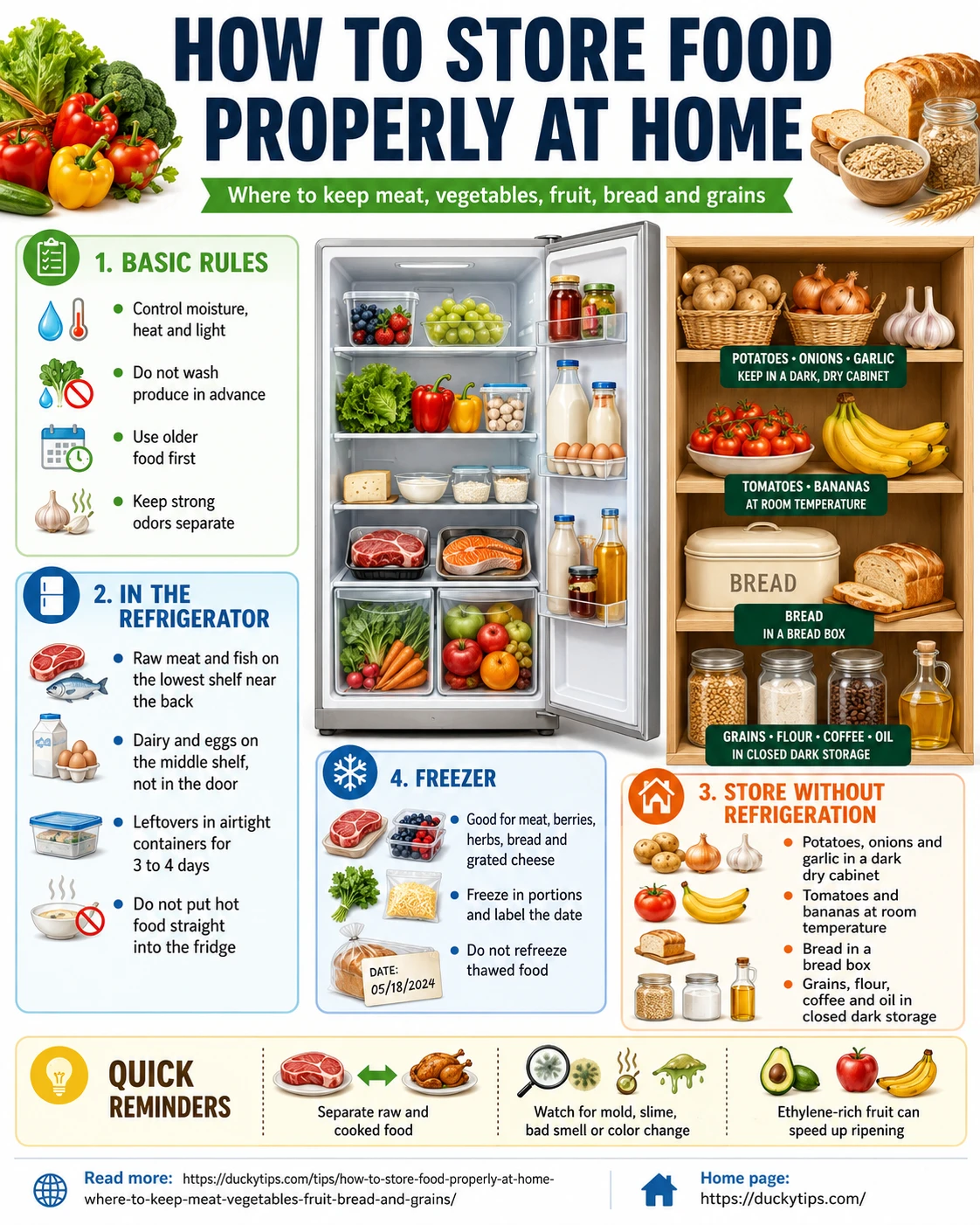
Food often spoils faster not because it is bad, but because it is kept in the wrong place. Temperature, moisture, light, packaging and food “neighbors” all affect how long products stay fresh, safe and tasty. A few simple storage habits can help reduce waste, save money and make everyday cooking easier.
The first rule is to understand that not all food belongs in the refrigerator. Some products need cold air, some need a dry dark cabinet, and others keep their best texture at room temperature. Moisture can speed up mold growth, heat can start spoilage, and direct sunlight can damage vitamins, oils and natural flavor. This is why proper food storage is not only about convenience, but also about food quality.
Fresh fruit, berries and mushrooms should usually not be washed right after shopping. Water stays in tiny cracks on the surface and creates better conditions for mold. It is better to wash them shortly before eating or cooking. Eggs also should not be washed in advance because their shell has a natural protective layer. If that layer is damaged, bacteria may enter more easily.
Inside the refrigerator, placement matters. The coldest area is usually the lower shelf near the back wall, so raw meat, fish and seafood should be stored there in sealed containers. This helps prevent meat juice from dripping onto ready-to-eat food. Dairy products, eggs and leftovers are better placed on the middle shelves, not in the refrigerator door. The door is one of the warmest areas because the temperature changes every time it is opened.
Cooked food and leftovers should be cooled first and then placed in closed containers. Hot pots should not go straight into the refrigerator because they raise the temperature inside and may affect nearby products. Most cooked meals, such as soup, rice, pasta or meat dishes, should be eaten within a few days when kept cold and properly sealed.
Some vegetables and fruit are better stored outside the refrigerator. Potatoes, onions and garlic need a dark, dry and ventilated place. Tomatoes often lose flavor and texture in the cold, while bananas can quickly turn black in the refrigerator. Apples, bananas and tomatoes release ethylene, a natural gas that speeds up ripening, so they should not be stored too close to delicate greens, carrots, cucumbers or salads.
Bread is another product that people often store incorrectly. A refrigerator can slow mold, but it also makes bread dry and less pleasant to eat. For everyday use, a bread box or closed cabinet is usually better. If you need to keep bread for longer, freezing it in portions is a practical option.
Dry goods also need attention. Grains, flour, pasta and similar products should be stored in airtight jars or strong containers, not left open in paper bags. This helps protect them from moisture, odors and insects. Coffee and vegetable oils should be kept away from sunlight because light can damage their aroma and taste. Opened canned food should be moved from the tin into a glass or food-safe container.
Freezing is useful, but it does not fix spoiled food. Only fresh products should be frozen. Meat, fish, bread, berries, herbs, sliced fruit, butter and grated hard cheese usually freeze well. Foods with a lot of water, such as cucumbers, leafy lettuce or creamy sauces, often lose their texture after thawing. It is also better not to refreeze thawed meat or fish because the texture becomes worse and the risk of bacterial growth increases.
A good storage routine includes simple checks. Bad smell, slime, mold, swollen packaging, unusual color or sour taste are warning signs. Spoiled food should not be tasted just to “check” it. With soft foods, mold can spread deeper than it looks on the surface, so cutting off the visible part is not always safe.
The main idea is simple. Keep raw and cooked food separate, use older products first, avoid unnecessary moisture, store strong-smelling products in closed containers, and choose the right place for each food type. These small habits help food stay fresh longer and make the kitchen cleaner and safer.
For a more detailed breakdown of where to keep meat, vegetables, fruit, bread, grains and other everyday products, read this full food storage guide. You can also find more useful household tips, food advice and practical guides on Ducky Tips.